The black caiman
The black caiman (Melanosuchus niger)
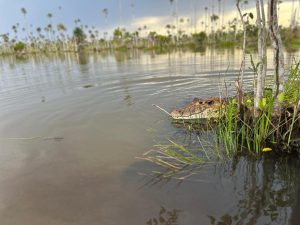
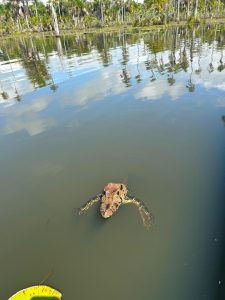
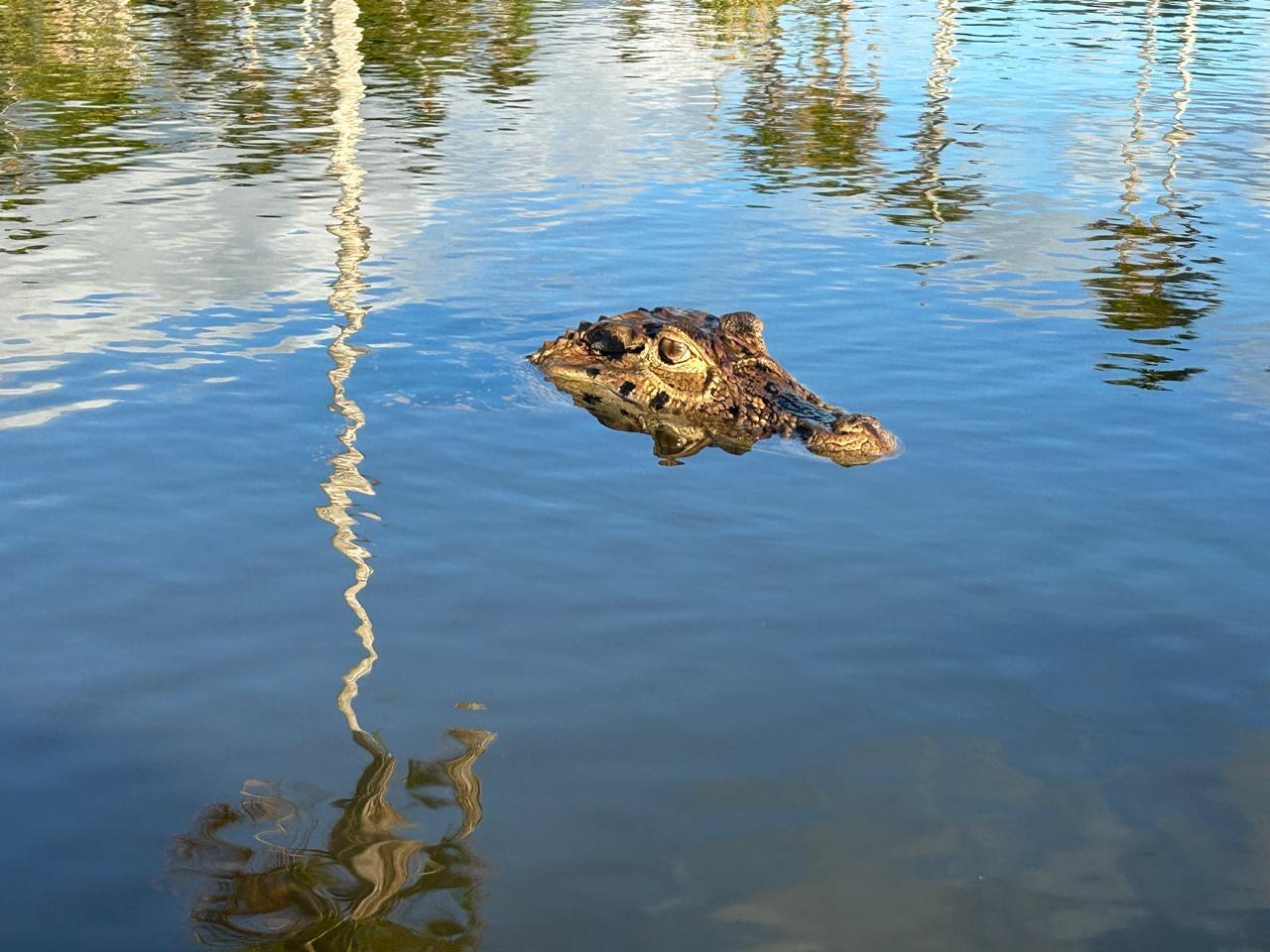
The black caiman or jacaré negro (Melanosuchus niger) is a sauropsid of the alligator family and the only living species of its genus. It is characterized by its distinctive dark coloration and inhabits the Amazon region. It can reach up to 6 meters in length, making it a predator capable of hunting large animals such as deer, capybaras, tapirs, and other sizable mammals.
Characteristics
As its common and scientific names suggest, the black caiman has a dark coloration in adulthood, which in some individuals may appear almost completely black. The lower jaw typically shows gray to brown bands. Juveniles, on the other hand, have a more vivid coloration, with prominent white to pale yellow bands along their flanks, which may remain partially visible even into adulthood.
Its morphology differs in some respects from that of other caimans, although it retains the characteristic bony crest of the group. It has a large, heavy head, which gives it an advantage when capturing larger prey. Like other crocodilians, it has a long, robust body with powerful jaws, a long tail, and short legs. Its skin is thick and scaly, and its eyes and nostrils are positioned on the top of its head, allowing it to see and breathe while the rest of its body remains submerged.
Ecology and Diet
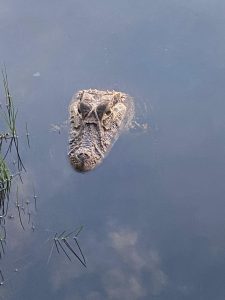
The black caiman is the largest predator in the Amazon ecosystem. Its diet is varied and includes fish, reptiles, birds, and mammals. It is considered a generalist predator and an apex predator, capable of capturing virtually any animal within its habitat, including other predators.
Although few detailed ecological studies have been conducted on the species, it is known to occupy its own ecological niche, allowing it to coexist with other large predators with relatively little competition. As the top predator in its ecosystem, it may also be considered a keystone species, playing a fundamental role in maintaining the balance and structure of the Amazon ecosystem.